









If you're new to making charcuterie boards, never fear. Below I lay out various tips and tricks for making a great charcutire board. I also explain why they are ideal for parties, three tips for planning a board, ideas on what to include, and three tips to make servings a charcuterie board easier.
Keep in mind that charcuterie boards are a great way to serve and enjoy various foods, making them excellent candidates for a group gathering. They also make for a visually stunning spread that's perfect for sharing with your guests.
You've got this!
Jump to:
- Why a Charcuterie Board Is Ideal For A Party
- 3 Tips To Keep In Mind When Planning A Charcuterie Board
- Ideas on what to include
- 3 Tips to make servings a charcuterie board easier
- Interesting Background Information: Carcuterie vs Charcuterie Board vs Grazing Board
- Drinks that you could serve alongside charcuterie boards:
Why a Charcuterie Board Is Ideal For A Party
You can create a board tailored to your gatherings theme, guests' dietary preferences, or both. The board can focus on sweet or savory foods or include a range of different flavors and textures, helping you ensure that something will appeal to everyone.
Charcuterie boards are ideal for special occasions such as holidays, birthdays, or other celebrations, especially if guests will be standing or mingling.
For example, you can check out my Breakfast Charcuterie Board Ideas if you're considering holding a brunch time baby shower.
Appeal to a large number of guests
A charcuterie board is, in many ways, a fancy potluck. By serving an assortment of various foods, guests can mix and match according to their preferences. This makes it perfect for when you have a large group of people whose preferences vary significantly.
Easy to Prepare
Preparing a charcuterie board is relatively easy. Since no cooking is required (unless you want to prepare some of the elements yourself), your only task is to arrange the ingredients on the board. This can be as simple or as complex as you'd like it to be.
Easy to Accomodate Dietary Destrictions or Preferences
By serving a charcuterie board as a party's main meal or focal point, you can easily accommodate many dietary restrictions or preferences. You can serve gluten-free bread, dairy-free cheeses, and vegan spreads to accommodate guests with those special dietary needs.
3 Tips To Keep In Mind When Planning A Charcuterie Board
When planning a charcuterie board, there are a few key ideas to remember to ensure that it is not only visually appealing but also delicious and works for your guests.
1. Use the Right Board
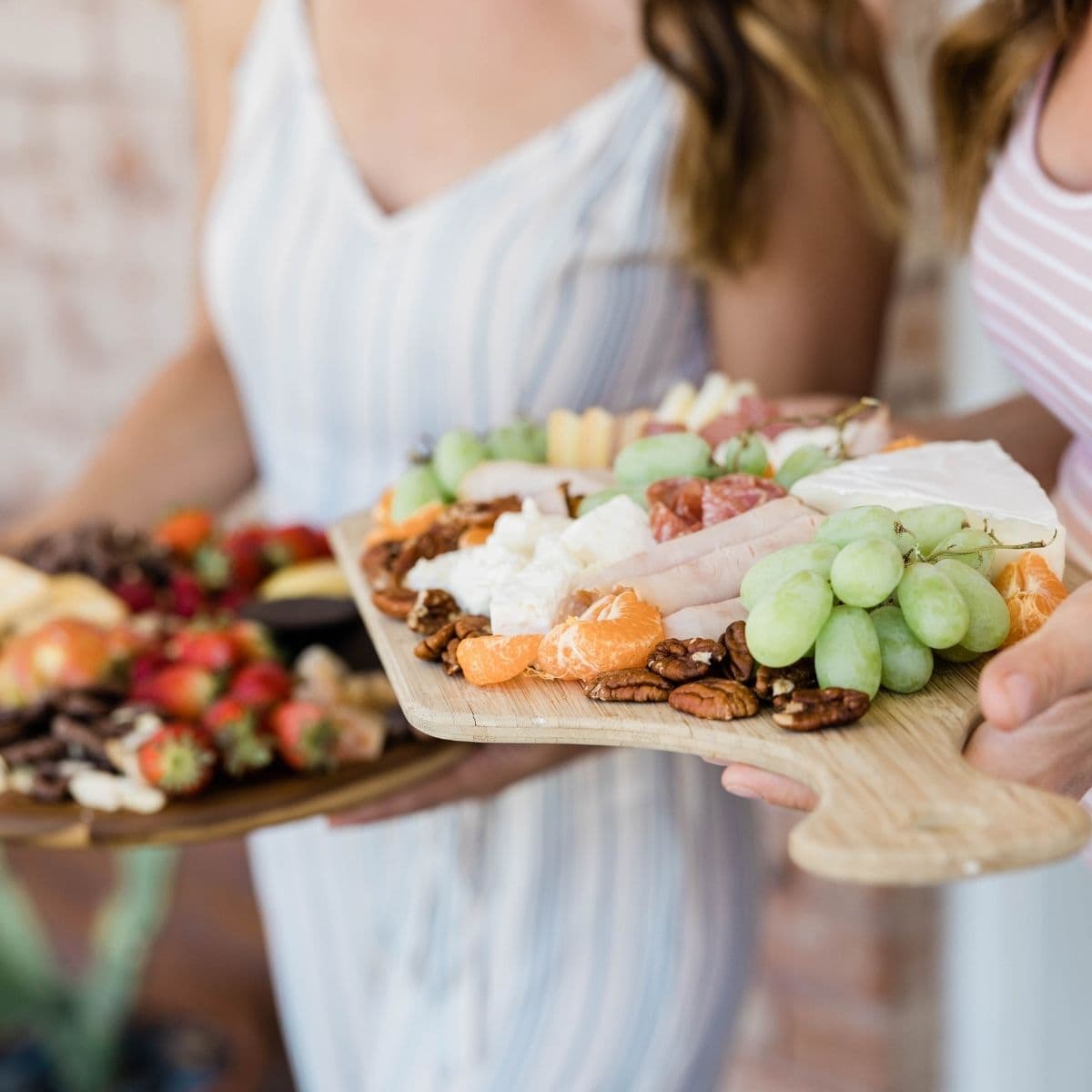
The foundation of any charcuterie board is the board itself. A wooden board is a classic choice, but you can also get creative and use a slate board or a marble platter. Whatever board you choose, make sure it is large enough to hold all of your meats, cheese, and other ingredients and has enough space for arranging them in an aesthetically pleasing way.
If you don't have a big board or want easier cleanup, you can also lay down large swaths of parchment paper over some plastic wrap and pile food on top of that. You can also use cookie sheets with a rim if you need to make them in advance
2. Think in Zones
When it comes to arranging the board, think about creating different zones or sections.
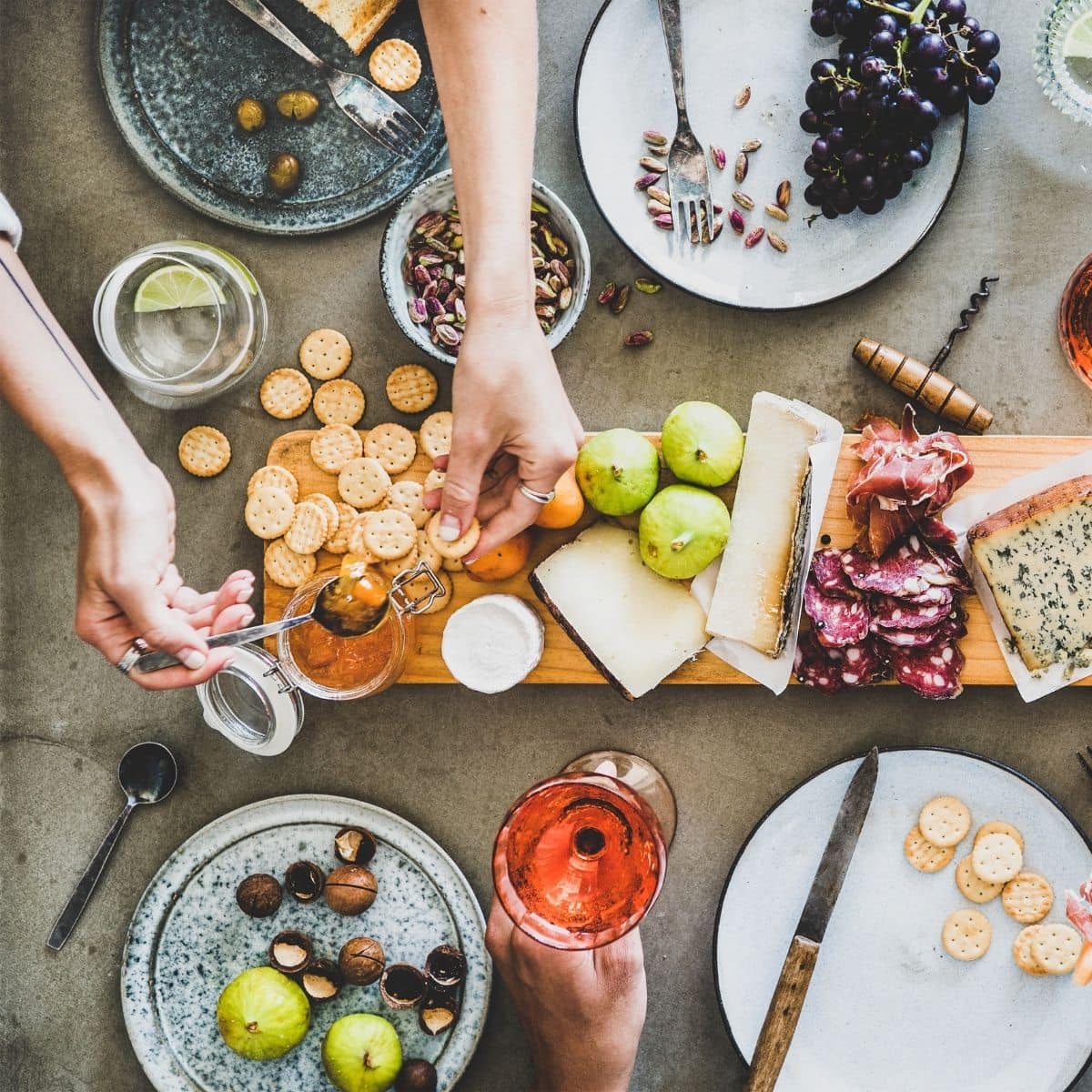
For example, you could have a section for fruit zone where all the sliced fruit goes. In the cheese and bread section you'd lay down lines of cheese and bread next to each other. This will not only make it easier for your guests to navigate the board, but it will also add pops of color and visual appeal. Small bowls are a wonderful way to contain smaller items or items with more intense flavors, such as pickles, olives, or sauces and jams.
Pro Hosting Tip: Arrange similar foods on smaller boards, then group the smaller boards together to create the visual appeal of a large board.
3. Consider Variety and Duality
It's important to incorporate a variety of tastes and textures by using different types of meats, cheeses, fruits, and veggies on the charcuterie board. This balance will give your guests options.
Sweet and savory: If you have a meat focused board, make sure to add in some sweet jams or dried fruits. If you have a dessert charcuterie board, considered layering in some salted nuts.
Fresh and dried: If you serve dried fruits and spreads, make sure you also have plenty of fresh items on the board as well, such as fruit, fresh bread, or fresh cheese.
Light and heavy: Make sure the board has a good mix of lighter items such sliced vegetables, alongside the heavier cured meats and decadent cheese.
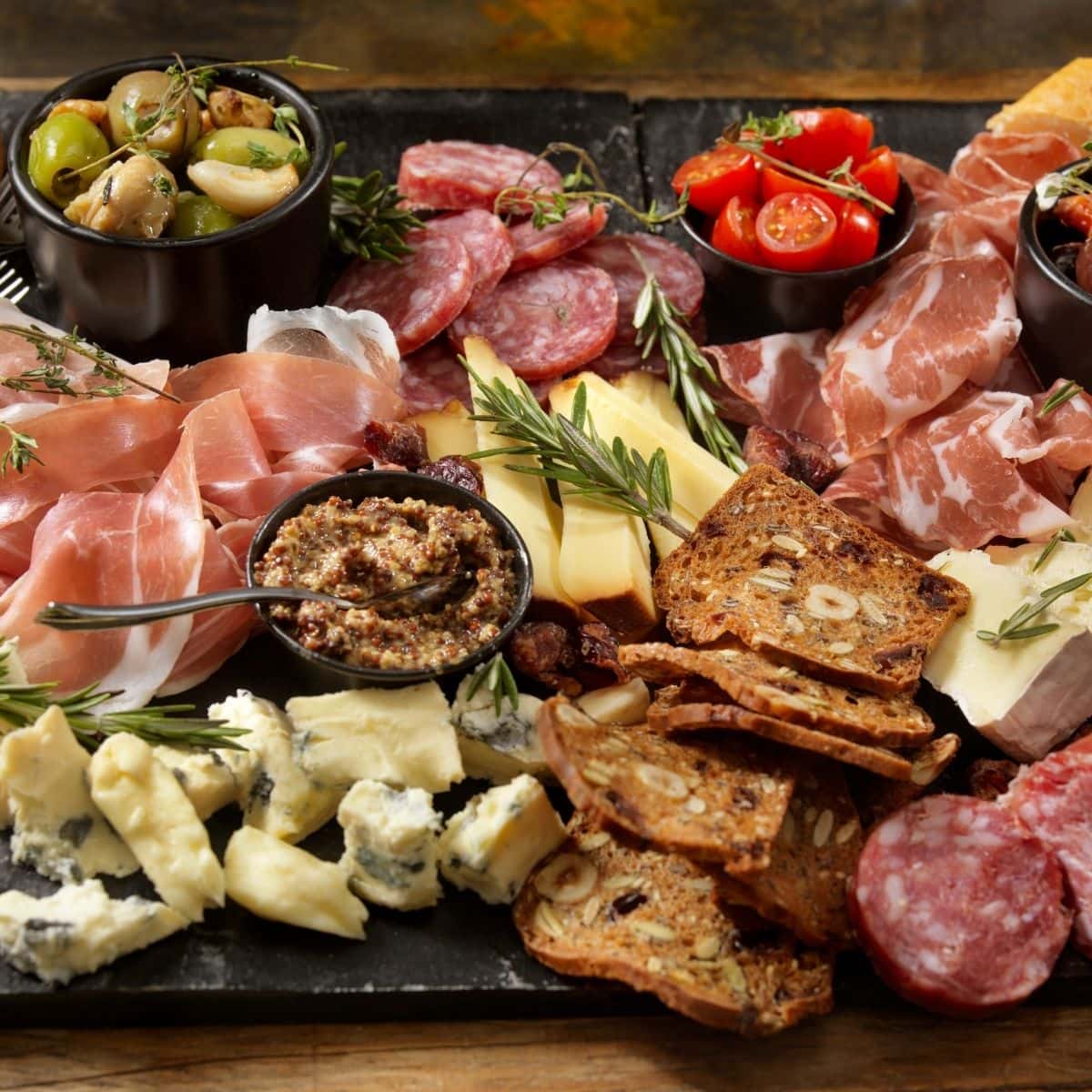
Ideas on what to include
Fruits
- Fresh berries: blueberries, blackberries, raspberries, and strawberries.
- Sliced citrus: oranges, but Myer lemon slices are welcome additions too!
- Sliced stone fruit: plums, peaches, or apricots.
- Sliced apples or pears.
Vegetables
- Sliced fresh veggies: carrots, cucumbers, bell peppers, sugar snap peas, celery
- Roasted veggies: roasted broccoli or cauliflower,
- Picked veggies: pickles, giardiniera mix, or any quick pickled veggies.
Cured Meats
- Prosciutto: A dry-cured Italian ham, thinly sliced and often delicate in flavor.
- Salami: A type of cured sausage made from fermented and air-dried meat, often seasoned with various spices.
- Chorizo: A spicy Spanish sausage made from pork and seasoned with smoked paprika and garlic.
- Coppa (Capicola): A traditional Italian cold cut made from pork shoulder or neck, seasoned and cured.
- Pancetta: An Italian bacon made from pork belly that is salt cured and often seasoned with spices like nutmeg, pepper, and fennel.
- Bresaola: An Italian cured beef, air-dried and aged, usually thinly sliced.
- Soppressata: An Italian dry-cured salami, often made with coarsely ground pork and seasoned with garlic and hot peppers.
Soft Cheeses
- Brie: A creamy French cheese with a soft, edible rind and a mild, buttery flavor. It pairs well with a variety of meats due to its mild taste and creamy texture.
- Camembert: Similar to Brie, Camembert is a soft French cheese with a creamy texture and a slightly stronger flavor.
- Goat Cheese (Chèvre): A tangy and creamy cheese made from goat's milk, often available in various flavors such as plain, herbed, or coated in ash. You can serve it plain or add mix-ins, like in this Roasted Garlic and Goat Cheese spread.
- Blue Cheese: While not traditionally "soft" in the same sense as Brie or Camembert, many varieties of blue cheese have a creamy texture with a bold and tangy flavor.
Medium Cheeses
- Gouda: A Dutch cheese known for its creamy texture and sweet, nutty flavor. If you can find a smoked gouda, I recommend trying that!
- Cheddar: A widely popular cheese originating from England, cheddar comes in various forms ranging from mild to sharp.
- Manchego: Manchego is a Spanish cheese made from sheep's milk, and has a firm texture and a nutty, slightly salty flavor.
- Havarti: A Danish cheese with a semi-soft texture and a mild, buttery flavor. You can often find it with dill, which I prefer!
Hard Cheeses
- Parmigiano-Reggiano: An Italian cheese known for its granular texture and nutty, savory flavor. Make sure this is thinly sliced.
- Pecorino Romano: Another Italian cheese made from sheep's milk, Pecorino Romano has a hard texture and a sharp, salty taste. This should be sliced or broken into bite size crumbles.
- Asiago: An Italian cheese with a firm texture and a slightly nutty flavor. Asiago comes in two varieties: fresh (Asiago Pressato) and aged (Asiago d'Allevo). Like the other two, asiago should be sliced or cut into crumbles before being added to the board.
Jams and Spreads
- Fig Jam: A sweet and slightly tangy spread made from figs. Trader Joe's has an excellent one.
- Apricot Preserves: A classic spread with a sweet and slightly tart flavor, it's a classic on most boards these days.
- Red Pepper Jelly: A spicy-sweet jelly made from red peppers, this will add a kick of flavor that pairs well with a variety of meats and cheeses.
- Cranberry Relish: This is perfect for the holiday season as it offers a festive touch to a charcuterie board.
- Grainy Mustard: A coarse-textured mustard with whole mustard seeds provides a zesty flavor option.
- Honey or Honeycomb: Honey is natural sweetener with floral notes, and adds a touch of sweetness and balance to the charcuterie board. Honeycomb cut into smaller pieces is a way to add a luxurious feel to the board.
Bread, Crackers, or Breadsticks
- Baguette Slices: Thin slices of French baguette have a crisp crust and soft interior.
- Crackers: Various types such as water crackers, sesame crackers, or whole wheat crackers, provide a neutral base for showcasing the flavors of meats and cheeses.
- Crostini: Small, toasted bread slices brushed with olive oil, garlic, and herbs, adding a crunchy texture and savory flavor to complement the charcuterie.
- Breadsticks (Grissini): Thin, crunchy breadsticks often flavored with herbs or cheese, providing a delightful contrast to the softness of cheeses and meats.
Related:
If you want to serve a premade crostini bite on your next charcutrie board, I'd recommend my Mushroom and Garlic Crostini.
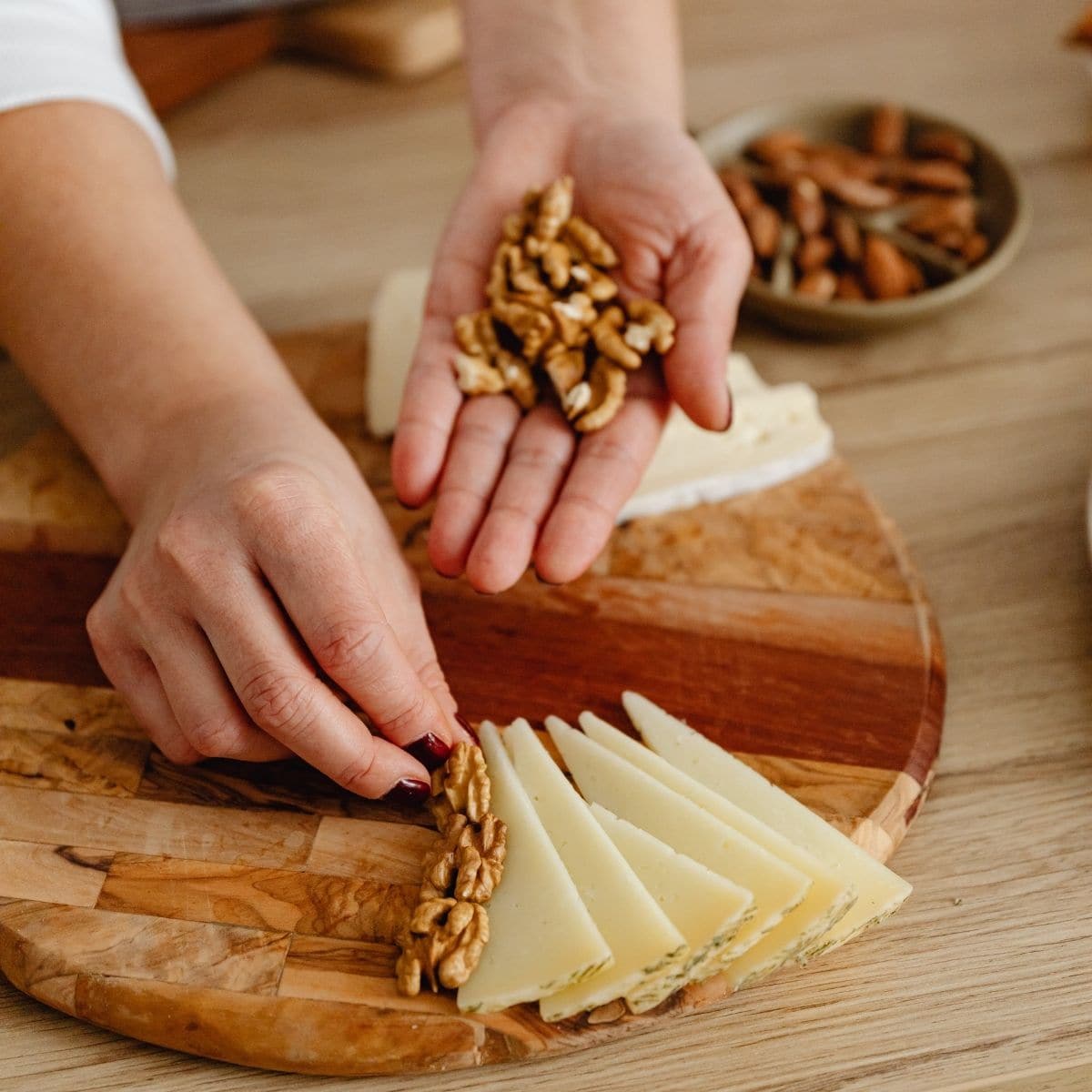
3 Tips to make servings a charcuterie board easier
1. Prep ahead
Decide what you want to serve, what you want to serve it on, and sketch out a rough idea of where you want everything to go. You'll need to make adjustments to the layout, but a general plan of how you want it to look can be very helpful.
Many fruits can be cut the night before, and many meats can be folded the night before as well.
2. Buy pre-cut cheeses and bread
Buying precut cheese or bread can significantly cut down on the prep-time. Panera will slice your bread on site, so you can buy that the night before your gathering or the morning of.
3. Portion out what you can in advance
If you are serving nuts and berries in their own bowls, you can portion those into bowls the night before. Make sure the bowls are tightly wrapped to prevent anything from getting stale.
Interesting Background Information: Carcuterie vs Charcuterie Board vs Grazing Board
I am taking great liberty with the word charcuterie in this and related posts. The word charcuterie is specifically defined as "a branch of French cuisine devoted to prepared meat products, such as bacon, ham, sausage, terrines, galantines, ballotines, pâtés, and confit, primarily from pork. https://en.wikipedia.org/wiki/Charcuterie
Charcuterie Board is a phrase used to describe an appetizer course of mainly meats and cheeses, often served with bread or crackers before a meal. https://en.wikipedia.org/wiki/Charcuterie_board
However, in recent years, the phrase "charcuterie board" has come to denote a collection of various related foods arranged beautifully and served on a large board. A board with meat, cheeses, and various breads, nuts, fruits, spreads, and garnishes might come to mind. But there are also breakfast charcuterie boards, dessert charcuterie boards, and country-specific charcuterie boards, such as Mexican or Mediterranean charcuterie boards.
Cheers!
Susan
Drinks that you could serve alongside charcuterie boards:
Charcuterie boards aren't complete without fancy drinks!





Join the Discussion!