






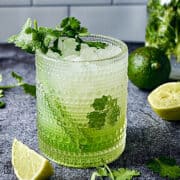
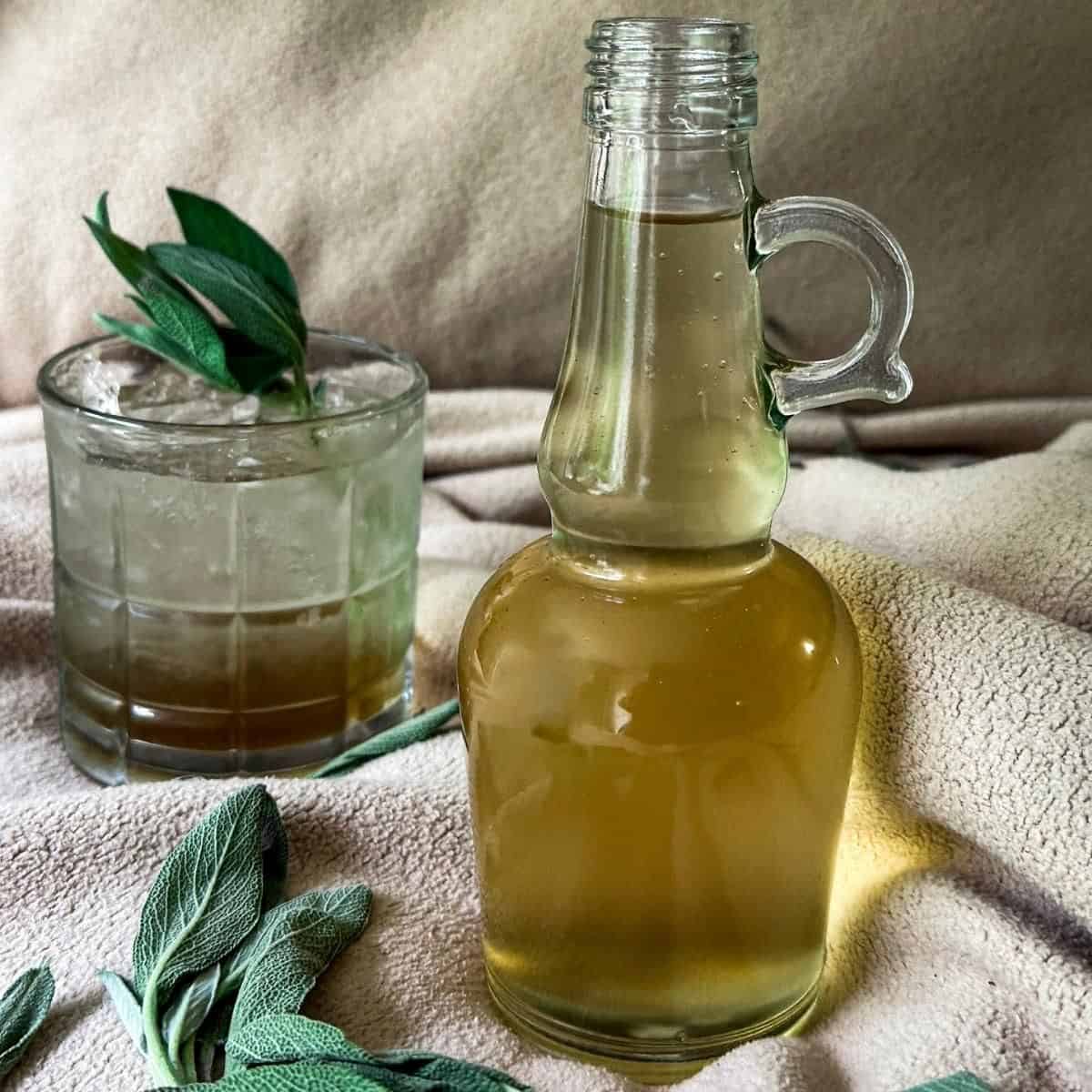
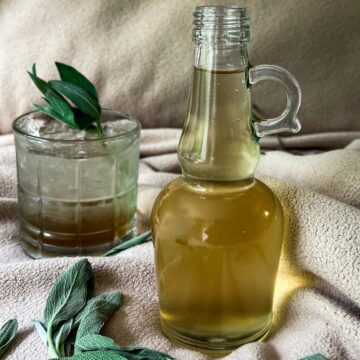
This sage simple syrup is straightforward and easy to make and use. It gives your drinks or desserts a earthy and woodsy flavor. Stir it in with a latte, drizzle over ice cream, or mix in with your favorite mocktail for an added layer of flavor.
Jump to:
Ingredients
- Fresh Sage - The fresher the better. If you have home or garden grown sage, that's ideal. If not, find the absolute freshest sage you can find. If it's packaged in a plastic clamshell, try to make sure there are no black or dark brown leaves.
- Sugar - Granulated white sugar is really the best option for herbal simple syrups. Brown sugar, demerara sugar, or other sweeteners can actually overshadow the herbal flavor.
- Water - I only include this because it's so annoying to me when I'm making a recipe and it calls for water in the directions, but not in the ingredient list. If I prepped all my ingredients and then have to fumble for one, it's unnecessary. If you have heavily chlorinated water, I do recommend that you use filtered or bottled water.
See recipe card for full quantities.
Instructions
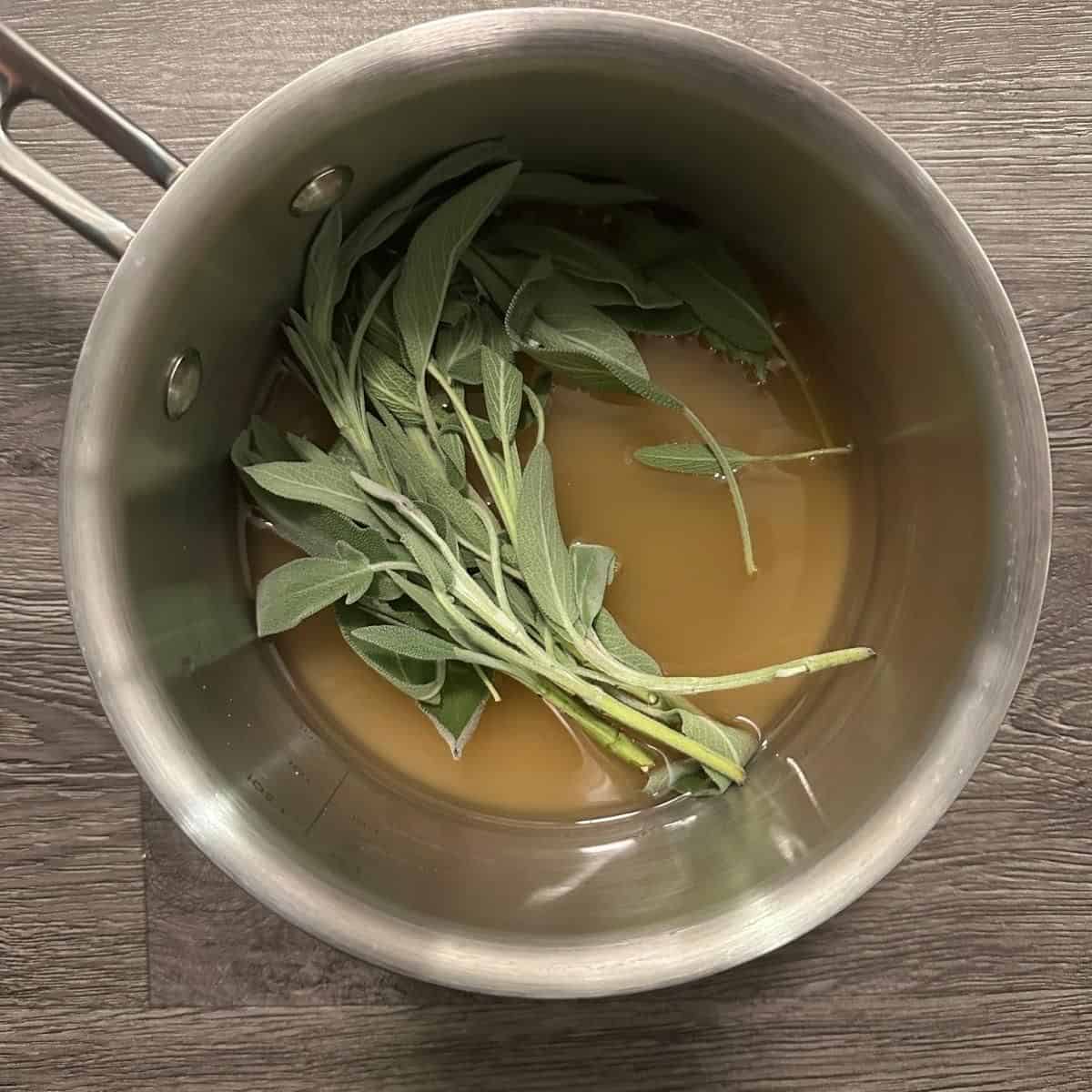
Put all ingredients in a small sauce pot, simmer gently, and let infuse overnight. It really is that easy.
Hint: If you want the sage simple syrup to have a more bitter edge, muddle the sage stems before you simmer it, and again after it cools to room temp.
Substitutions
I strongly recommend not making any substitutions. If you want to use a slightly less processed granulated sugar, that would be my only recommendation.
Variations
Sage simple syrup is already a variation of the classic simple syrup. If you want to make a different type of herbal simple syrup, just swap out the sage for another herb of choice. Check out this Rosemary Simple Syrup Recipe for Drinks if you'd like to print a separate recipe card.
Storage
This can be stored for up to two weeks in an airtight contain in the fridge. After two weeks you run the risk of developing mold in the syrup.
I suppose you could freeze it, but I've never done. I use it too fast!
Top tip
I prefer to use a simple squeeze bottle when I'm the one in charge of making drinks. However, if it's for a DIY soda bar where guests will be serving themselves, I opt for either an elegant pump bottle or a stylish glass jar that pours smoothly.
Recommended Reading
If you want to listen to a super fun podcast about sage as an ingredient, I highly recommend checking out the "Cracking Wise with Sage" episode of the Savor Podcast (published on January 6, 2021).
The Wikipedia page on sage, whose official name is Salvia officinalis, discusses the various cultivars and uses of sage. So, if you want some prime trivia to share over mocktail drinks, listen to the podcast and read up on salvia officinalis.
FAQ
Theoretically for a month if stored correctly. However, I've found that with the introduction of an organic component, such as sage or other herbs, I'm less inclined to keep it for longer than 2 weeks. Even with the high sugar content and keeping it cool, mold can still form if it's kept longer than 2 weeks.
My default answer to questions about ingesting any essential oil is, "Not unless your doctor clears it."
But if you're reading this question, I'm guessing that you don't have fresh sage, but you do have sage essential oils. If that's the case, you're on your own if you try it!
In short, it's sugar that's already been dissolved, and therefor it is immediately incorporated into your drink with a quick stir. Adding granulated sugar to any drink, hot or cold, will require more stirring and waiting than if you used simple syrup.
Related
Looking for other recipes or hosting inspiration? Check out these recent posts:


📖 Recipe
Sage Simple Syrup Recipe
Ingredients
- 4-5 large sprigs of sage - about 1 cup packed leaves and stems
- 1 cup granulated sugar
- 1 cup water
Instructions
- In a small saucepan add the sugar, water, and sage.
- Stir occasionally over medium heat until the sugar is fully dissolved.
- Once the sugar is dissolved, simmer for about 3-4 minutes.
- Remove pan from heat and allow the mixture to cool to room temperature, about 2 hours.
- Cover, and allow syrup to rest overnight so the sage can continue infusing the syrup.
- Remove the sage and transfer the syrup to a separate bottle or jar for storage; straining if necessary.
- Keep refrigerated and use within 2 weeks.
Join the Discussion!